AUDIO PRODUCTION

On-Air Interviews

Malawi: A Path Forward | Big Picture Science

The abrupt defunding of USAID in 2025 caused global shockwaves. The cuts thrust recipient countries who were dependent on foreign aid for medical care into health crises. One area that has been particularly hard hit is Malawi, a country in southeastern Africa where doctors and community organizers are struggling to fill the gaps in essential services left in the wake of the USAID cuts. The loss of local outreach clinics and lack of fuel for ambulances has caused severe delaysβ€”and sometimes tragic outcomesβ€”in providing care to mothers and children. A year out from the cuts, we look at how Malawi is rethinking its relationship to foreign aid as it considers how to continue providing vital health services.

In the first of a series supported by the nonprofit Pulitzer Center and in collaboration with Science Magazine, we provide an on-the-ground look at the impact of USAID defunding on health services in key spots across the globe.
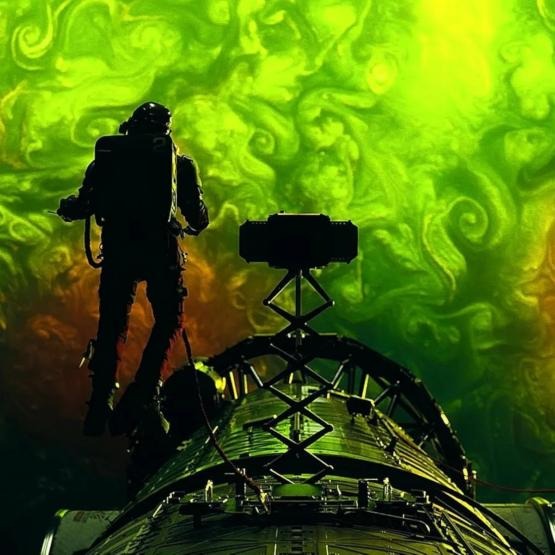

Skeptic Check: Project Hail Mary

As protagonist Ryland Grace fights to save Earth - and possibly the universe - in Project Hail Mary, author Andy Weir discusses the science behind his sci-fi story and what it’s like to see it adapted for the big screen. From a diversity of aliens thriving in extreme environments, to our sun’s shortening lifespan, to the conundrum of keeping astronauts alive during intergalactic missions, we consider the possibility of science fiction becoming future reality. A NASA astrobiologist who consulted on the book weighs in on how Earthly creatures have inspired some of our favorite science fiction aliens. Plus, science fiction author Becky Chambers discusses how she balances science fact with fiction in her work.

The Decomposers | Big Picture Science

What happens to us after we die is as much a question for anthropology and ecology as it is for theology. Death and decay are not comfortable subjects, but some scientists study them unflinchingly, knowing that doing so yields valuable scientific insights about decomposition. We hear about The Body Farm at the University of Tennessee, Knoxville where forensic anthropologists dissect how variables, such as weather and insects, affect the rate of decomposition, and why a cadaver island has its own ecology. Plus, how a mystery about Neanderthal diets was solved by studying maggots, and why a chemical element discovered by alchemists, and recycled at death in your garden, is essential for life.

Some Chemicals are Forever | Big Picture Science

As their name suggests, β€œforever chemicals” have extraordinary staying power. When these nearly indestructible compounds find their way into our soil and water, they don’t break down for hundreds or thousands of years. PFAS – the name for these synthetic chemicals – isn’t just in our natural environment. Scientists have found it everywhere, including in the blood of nearly every living being.

In this episode, we talk to the reporter who broke open the story about a decades-long corporate coverup regarding forever chemicals, look at what we know about their health effects, and consider how a kneecapping of the EPA’s regulatory power may weaken the best tool we have for protecting ourselves from PFAS contamination.

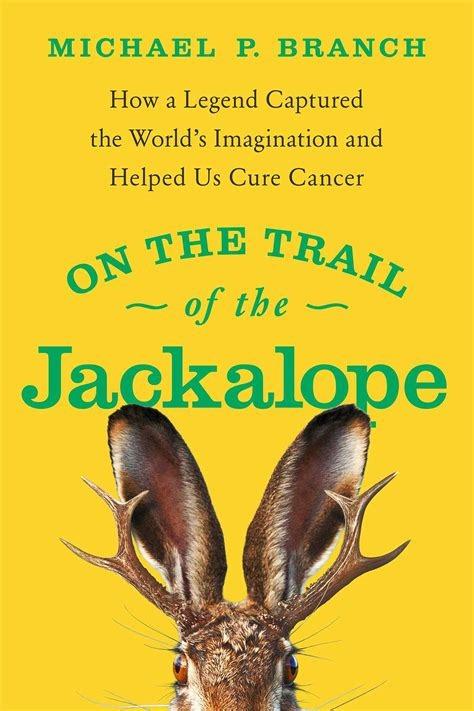
Skeptic Check: Cryptids | Big Picture Science

Bigfoot could get official status if proposed legislation passes making it the state cryptid of California. If nothing else, the effort shows that fascination with cryptids has an outsized footprint on our culture. We look at why mythical creatures continue to capture imaginations - as well as passions - of die-hard believers, despite no evidence for their existence. An author uncovers the origin of a beloved hoax in the American West and its unexpected ties to a real animal and historical medic...

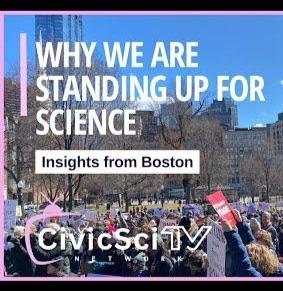
In Boston, scientists & others share why they are standing up for science. #standupforscience2025

On March 7, 2025, Stand Up for Science rallies took place in Washington DC and 31 other cities. In Boston, CivicSciTV's Shannon Geary recorded the sounds from the rally as attendees answered why they were standing up for science. Many expressed that science is a lifelong passion and the driving force behind medical breakthroughs, environmental protection, and overall societal progress. Some warned that funding cuts and new policy decisions threaten to undo decades of advancement by stripping away critical scientific tools and insights. And so much more!

Beyond voicing concerns, some attendees called for proactive civic engagement. They urged individuals to contact their representatives, attend town halls, and foster community collaboration to ensure that science remains a public good. The message was clear: protecting scientific research and innovation is essential for securing a better and more informed future for everyone. οΏΌ

Learn about Stand Up for Science and their goals: https://standupforscience2025.org/

πŸ“± Join our community on:
βž” LinkedIn: https://www.linkedin.com/company/cs-media-lab/
β€”β€”β€”β€”β€”β€”β€”β€”β€”β€”β€”β€”β€”β€”β€”β€”β€”β€”β€”β€”β€”β€”β€”β€”
πŸ”Ž Relevant Hashtags: #CivicSciTV #SciComm #civicsciencenews #civicscience #standupforscience #boston #bostonnews #civicscitvnews #standupforscience2025
β€”β€”β€”β€”β€”β€”β€”β€”β€”β€”β€”β€”β€”β€”β€”β€”β€”β€”β€”β€”β€”β€”β€”β€”
Get more analysis, relevant links, and related coverage across video, audio, and print by visiting the Civic Science Media Lab Terminal: βž” https://civicsciencemedia.org
β€”β€”β€”β€”β€”β€”β€”β€”β€”β€”β€”β€”β€”β€”β€”β€”β€”β€”β€”β€”β€”β€”β€”β€”
Β© CivicSciTV Network. Any reproduction or republication of this video or audio, in whole or in part, is allowed provided proper citations are included.
β€”β€”β€”β€”β€”β€”β€”β€”β€”β€”β€”β€”β€”β€”β€”β€”β€”β€”β€”β€”β€”β€”β€”β€”
🌟 Subscription Link: @CivicSciTV

Spotlight on SETI: Episode 2 with Dr. Nathalie Cabrol

What is life? Even as the search for life in the universe evolves, surprisingly, there is no consensus on what life is. We must consider hunting for life not as we know it.Β 

In this second episode, Shannon Geary talks with astrobiologist Nathalie Cabrol, the director of the Carl Sagan Center for Research at the SETI Institute about her early interest in astrobiology, meeting Carl Sagan, and the evolving definition of life.

The Ocean's Genome

After helping to sequence the human genome more than twenty years ago, biochemist Craig Venter seemed to recede from the public eye. But he hadn’t retired. He had gone to sea and taken his revolutionary sequencing tools with him. We chatted with him about his multi-year voyage aboard the research vessel Sorcerer II, its parallels to Darwin’s voyage, and the surprising discoveries his team made about the sheer number and diversity of marine microbes and their roles in ocean ecosystems.

BIG PICTURE SCIENCE Podcast & Radio Show

Check Out Our Latest Episode Here: