VIDEO PRODUCTION

CIVIC SCIENCE MEDIA LAB

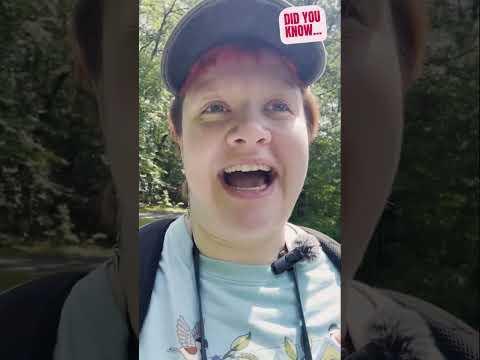
Did You Know Ep. 4: Shannon Geary tries bird watching for the first time.

First-time birder Shannon Geary, host of the "Did You Know" series in the CivicSciTV Newsroom, joins the Brookline Bird Club for a walk through Franklin Park in Boston to learn about birding.

“One day, a bird just captures your attention in a way it never has before,” says Cliff Cook, club president. That moment, he explains, is what birders call your spark bird.

With guidance from experienced birders, Shannon learns to identify birds by sound and logs her sightings in eBird, a global citizen science database. What begins as a quiet walk becomes a practice of attention, connection, and public participation in science.

🔭 Learn more about eBird: https://ebird.org/home
🐦 Brookline Bird Club: https://www.brooklinebirdclub.org
🎧 Narrated by: Shannon Geary
🎥 Produced by: CivicSciTV Network (Civic Science Media Lab)

Did You Know Ep. 3: Community science in action through the Hemlock Woolly Adelgid Project in Maine

In this episode of Did You Know in the CivicSciTV Newsroom, Correspondent Shannon Geary spotlights a student-powered effort to track an invasive pest threatening forests across the Eastern Seaboard. Led by the Gulf of Maine Research Institute (GMRI), the Hemlock Woolly Adelgid Project engages thousands of students—from Massachusetts to Nova Scotia—in hands-on ecological monitoring. The initiative is part of GMRI’s broader Ecosystem Investigation Network, which supports community science research in over 35 coastal communities annually.

The hemlock woolly adelgid, a sap-sucking insect native to Japan, was first reported in the U.S. in 1951. While it has devastated hemlock populations throughout much of the East Coast, it has yet to be detected in parts of northern New England. According to Meggie Harvey, GMRI’s Senior Program Manager, “We’re some of the last places in the country that still have really healthy Hemlock trees and where this pest isn’t found, and so kids are going out every year to check their same trees to see if they’re still healthy, to potentially be the first ones to spot this pest.”

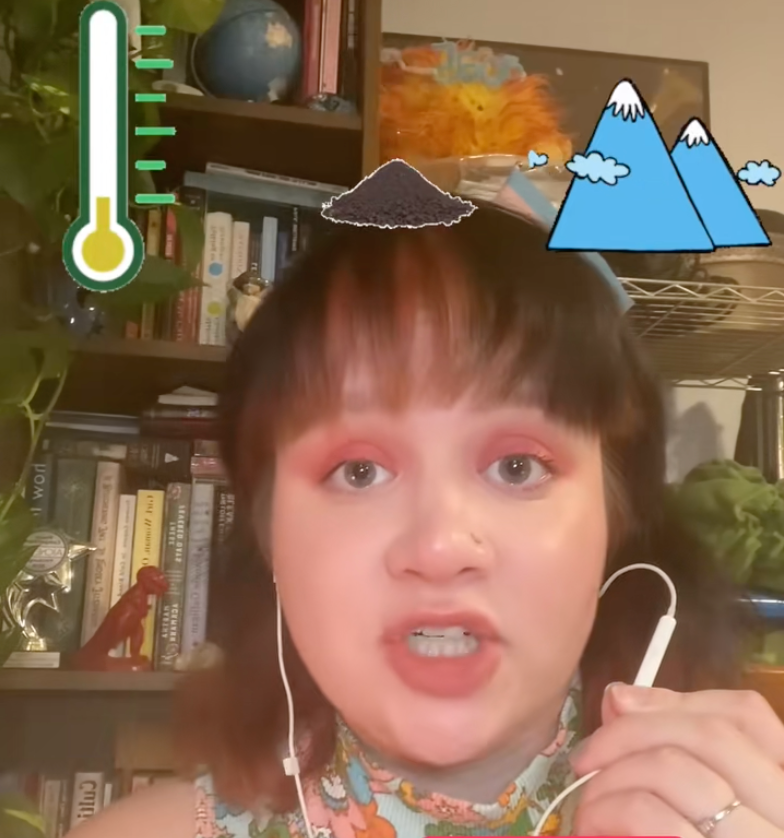
Students participating in the project inspect hemlock trees for signs of infestation, documenting their findings in a public database used to inform forest management decisions. These efforts have also uncovered key climate trends. “The data collected by these community scientists has shown that there is a strong link between temperature changes and the spread of the adelgid,” Harvey explains. During cold snaps, populations decline—but as winters grow milder in the Gulf of Maine, the pest spreads more easily.

GMRI emphasizes action and optimism in the face of ecological change. “It’s really hard to go out and see a bunch of dead or dying trees,” says Harvey, “but we try to focus on actions that are hopeful and positive and kind of bring people together, even as we’re seeing rapid changes.”

Harvey also points to the essential role of local knowledge: “No one observes or notices or is prepared to document the change in a community like somebody who lives there and works there.” She adds, “Having people who are invested in that place and who know the place well is critical in documenting changes that we’re seeing in our communities and our ecosystems.”

To explore more about GMRI’s community science initiatives, visit https://teach.gmri.org/ or access classroom resources at teach.gmri.org.

Did You Know Ep.2: Harvard Forest’s Schoolyard Ecology Program

In this episode of "Did You Know" in the CivicSciTV Newsroom, Correspondent Shannon Geary explores the Harvard Forest Schoolyard Ecology Program, which has been engaging K-12 students in ecological research since 2004. Founded by a group of ecologists at Harvard Forest in Petersham, Massachusetts, the program was designed to bring real-world scientific research into schoolyards, allowing students to participate in the same data collection and analysis as professional scientists.

How It Works

Students and teachers collect ecological data on their local environments and contribute it to Harvard Forest’s publicly accessible database, which now contains over 50,000 data points. There are currently 88 schools actively participating, spanning from Massachusetts to New York City, Washington D.C., and Georgia.

Key Research Projects
• Buds, Leaves, and Global Warming
The most popular project, based on Dr. John O’Keefe’s phenology research, tracks seasonal changes in deciduous trees. Students observe leaf color changes, bud bursts, and growing seasons, helping scientists study climate change impacts over time.
• Our Changing Forests
Inspired by Dr. Dave Orwig’s work, this project has students monitor forest plots to measure tree growth and carbon sequestration.
• Woolly Bully: The Hemlock Woolly Adelgid
Since 2004, students have tracked the spread of this invasive pest, providing valuable data for state foresters and researchers.
• Water in the Landscape: Vernal Pools (Currently Paused)
Originally led by Dr. Betsy Colburn, this project focused on biodiversity in seasonal pools. Some teachers still continue this work despite a lack of current training.

A Growing Community of Citizen Scientists

Beyond data collection, the program fosters engagement through trainings, workshops, and community storytelling. Workshops cover data literacy, graphing, and science communication, and educators, students, and researchers collaborate to turn classroom observations into meaningful scientific contributions.

As Katharine Hinkle, Youth Education Manager, explains:

“And I hear anecdotally from teachers, how the students have a lot of pride for their trees. They like to show off their trees to their family and friends when they're in the neighborhood. And just building those connections, you know, is really powerful, because we can't have a future generation who are going to advocate for the natural world if they don't have a relationship with the natural world. You can't fight for something you don't know. And so we want to make sure that they know their world.”

How to Get Involved
• Explore Harvard Forest’s LTER public database: https://harvardforest.fas.harvard.edu/data
• Attend trainings and workshops: https://harvardforest.fas.harvard.edu/schoolyard-lter-program
• Follow The Schoolyard Scientist Substack newsletter: https://schoolyardscientists.substack.com
• Listen to The Schoolyard Scientist Podcast: https://harvardforest.fas.harvard.edu/schoolyard-podcast
• Educators can contact Katharine Hinkle to bring the program to their classrooms: hinkle@fas.harvard.edu

By connecting students with long-term ecological research, the program not only provides valuable climate data but also fosters a new generation of environmental stewards.

Correction
In the video, Katharine Hinkle's name is misspelled. We regret the mistake.

📱 Join our community on:
➔ LinkedIn: https://www.linkedin.com/company/cs-media-lab/
————————————————————————
🔎 Relevant Hashtags: #CivicSciTV #SciComm #civicsciencenews #civicscience #didyouknow #didyouknowcivicscitv #harvarduniversity
————————————————————————
Get more analysis, relevant links, and related coverage across video, audio, and print by visiting the Civic Science Media Lab Terminal: ➔ https://civicsciencemedia.org
————————————————————————
© CivicSciTV Network. Any reproduction or republication of this video or audio, in whole or in part, is allowed provided proper citations are included.
————————————————————————
🌟 Subscription Link: @CivicSciTV
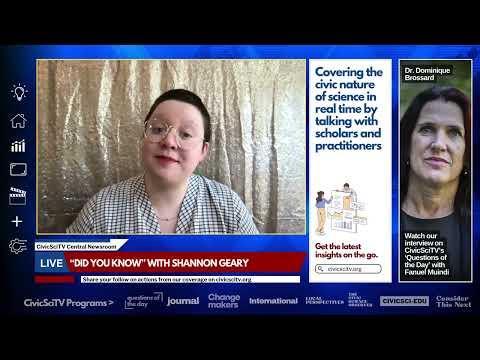
Citizen scientists are actively tracking light pollution. We talk to Kelly Beatty, an award-winning science journalist, astronomer, and longtime advocate for dark-sky policies

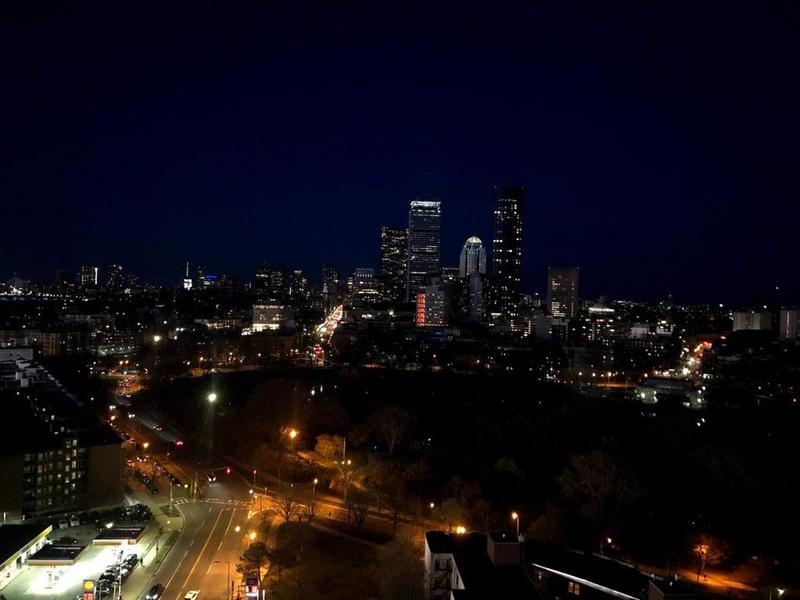
SOMERVILLE, MASS — Light pollution is erasing our night skies—but citizen scientists are stepping up to fight back. Through projects like Globe at Night, everyday people are gathering data to track the rapid brightening of our skies, providing crucial insights for scientists, educators, and policymakers.CivicSciTV Correspondent Shannon Geary reports from Massachusetts on how citizen scientists are pushing for change through the legislative efforts to regulate light pollution, and shares how educ...

OTHER PROJECTS

A World of Difference | Understanding and Supporting Twice-Exceptional (2e) Kids | Season 2022 | Episode 5 | PBS

This episode of “A World of Difference: Embracing Neurodiversity” introduces a twice-exceptional teen podcaster who shows the world why “exceptional” should be underlined. Experts unravel the confusion surrounding twice-exceptionality. And “Difference Maker” John “Jack” Horner reveals how his success with science helped him bury his struggles with undiagnosed dyslexia.

HealthDay Now: How the New Suicide And Crisis Lifeline is Answering the Call to Reach More in Distress

HealthDay Now: How the New Suicide And Crisis Lifeline is Answering the Call to Reach More in Distress

HealthDay’s Mabel Jong is joined by Colleen Carr, Director of the National Action Alliance for Suicide Prevention, and Cal Beyer, a member of the NAASP Executive Committee and a Workforce Risk and Worker Wellbeing specialist, about the rollout of the shortened 988 lifeline. Beyer and Carr will discuss how the lifeline works, why expanding mental health resources needs to be prioritized, and wh

HealthDay Now: How the New Suicide And Crisis Lifeline is Answering the Call to Reach More in Distress

HealthDay’s Mabel Jong is joined by Colleen Carr, Director of the National Action Alliance for Suicide Prevention, and Cal Beyer, a member of the NAASP Executive Committee and a Workforce Risk and Worker Wellbeing specialist, about the rollout of the shortened 988 lifeline. Beyer and Carr will discuss how the lifeline works, why expanding mental health resources needs to be prioritized, and what more needs to be done to ensure equitable support of those in need.